
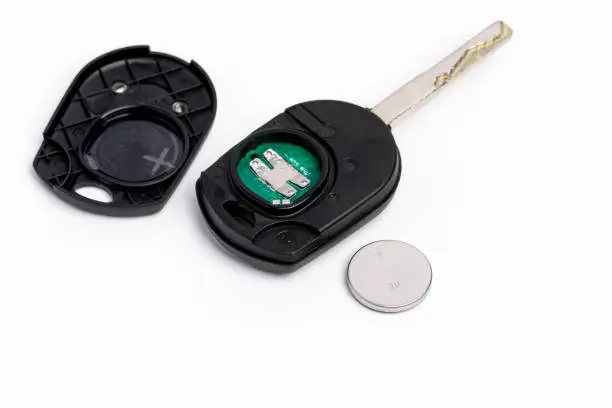
Most drivers only think about their key fob battery the moment it stops working — usually at the worst possible time. The good news is that a dying battery almost always gives warning signs first. Here's what to watch for, and what to do about it.
1. You have to stand closer to the car
If you used to unlock your car from across the parking lot but now have to be right next to the door, that's a classic sign the battery is losing strength. The fob's signal range shrinks gradually as the battery drains.
2. You have to press the button more than once
A healthy fob responds to a single press. If you're mashing the lock or unlock button two or three times before it registers, the battery is struggling to send a strong enough signal.
3. The response light is dim or flickers
Many fobs have a small LED that flashes when a button is pressed. A dim, flickering, or inconsistent light is often the clearest visual sign that the battery is nearly out.
4. Push-to-start takes longer, or fails intermittently
On smart key vehicles, a weak battery can cause the push-to-start button to take a few extra tries, or the car may occasionally fail to recognize the key is inside the cabin.
5. It's simply been over a year since the last change
Most key fob batteries (commonly CR2032 or CR2025 coin cells) last 1–2 years depending on usage. If you can't remember the last time you changed it, that alone is reason enough to check.
Replacing it yourself
On most fobs, replacement is simple: locate the small release button or seam, gently pry the fob open (a small flathead screwdriver or coin usually works), swap the old coin battery for a new one matching the same voltage and size, and snap the shell back together. If your fob doesn't respond even after a fresh battery, or you're not comfortable opening it yourself, our technicians can test, replace, and reprogram it on-site if needed.
Book A Technician Today
Whatever brought you to this article, our team can usually resolve it the same day.